GitOps Explained: A Practical Approach to Reliable and Scalable Deployments
GitOps brings discipline and reliability to modern deployments by using Git as the single source of truth. By shifting deployment control from external systems to the cluster itself, teams can achieve faster releases, safer rollbacks, and complete visibility across environments.
Introduction
Shipping software quickly is important—but shipping it reliably is even more critical. In fast-moving teams, deployment issues often become the biggest bottleneck, especially in cloud environments where infrastructure can be created instantly but not always used efficiently.
This is where GitOps comes in.
GitOps is not just a tool or a product. It’s a way of working where your entire system—applications, infrastructure, and configurations—is defined and controlled through Git. It brings consistency, auditability, and confidence to the deployment process.
What is GitOps?
At its core, GitOps is a set of practices where Git acts as the single source of truth for everything running in your system.
Instead of manually applying changes or relying on external systems to push updates, GitOps ensures that:
- All configurations are stored in Git
- Changes are reviewed and versioned
- Deployments are automated
- The system continuously aligns itself with what’s defined in Git
For a detailed description of GitOps principles, refer to: https://opengitops.dev/
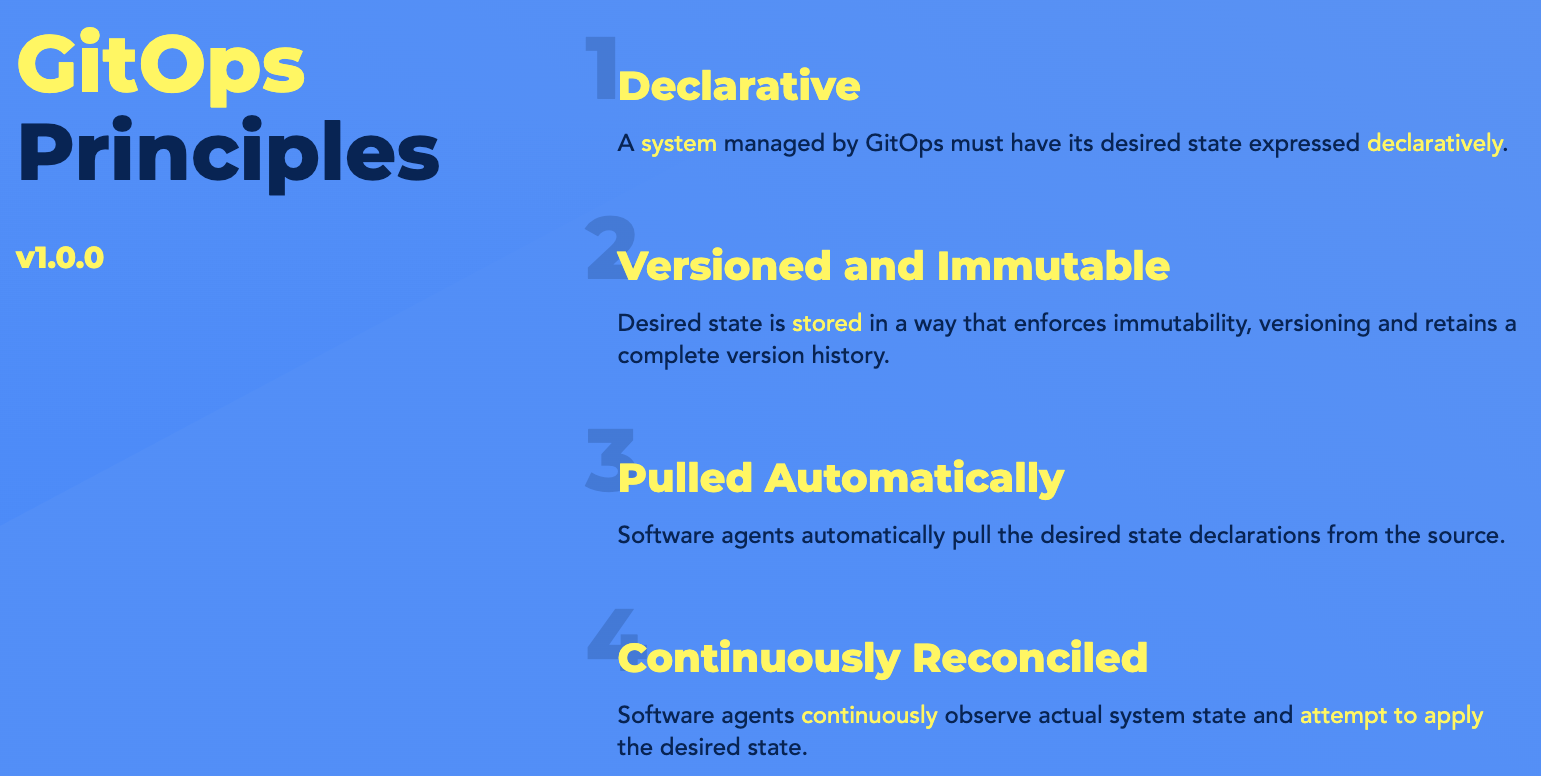
Core GitOps Principles
Key Principles of GitOps
GitOps is built on a few simple but powerful principles:
Declarative Everything
Infrastructure and applications are described in a declarative format (e.g., YAML).Git as the Source of Truth
The desired state of the system is always stored and versioned in Git.Automated Change Application
Any approved change in Git is automatically applied to the system.Continuous Reconciliation
Agents continuously ensure the system matches what is defined in Git—and alert when it doesn’t.
Traditional Deployment vs GitOps
Traditional Approach
In a typical setup:
- Developers commit code
- CI pipelines build and push container images
- CI/CD tools deploy using commands like
kubectl apply - The cluster state is directly modified from external systems
Challenges:
- Cluster state depends on manual or external actions
- CI/CD systems require direct access to the cluster
- Limited visibility into what exactly is running and why
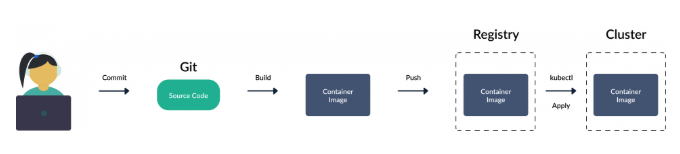
Traditional Deployment
GitOps Approach
With GitOps, the process changes in a meaningful way:
- Developers still commit code and build images
- A separate Git repository holds deployment manifests
- Changes are made to this repository (manually or via automation)
- A GitOps controller inside the cluster watches for changes
- The cluster pulls updates and reconciles its state automatically
What improves:
- Git becomes the single source of truth
- No external system needs full cluster access
- The system continuously ensures consistency
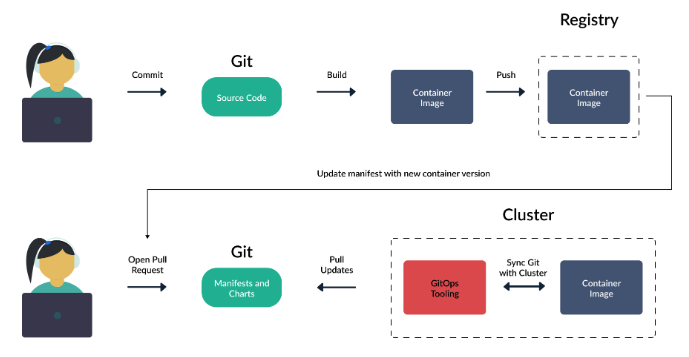
GitOps Approach
Why GitOps Matters
GitOps brings clarity and control to modern systems:
- You always know what is deployed—and why
- Rollbacks become as simple as reverting a Git commit
- Changes are auditable and traceable
- Teams gain confidence in deployments
GitOps Use Cases
1. Continuous Deployment of Applications
GitOps makes application deployment straightforward by using Git as the trigger for releases. Once a change is merged, the system automatically deploys it, ensuring consistency across environments. This is one of the easiest and most impactful ways to adopt GitOps.
2. Continuous Deployment of Cluster Resources
Beyond applications, GitOps can manage cluster-level components like monitoring tools, service meshes, and networking. This ensures that everything inside the cluster follows the same deployment model and benefits from versioning and rollback.
3. Continuous Deployment of Infrastructure
GitOps can extend to infrastructure as well, especially when combined with Infrastructure as Code tools. Platforms like Kubernetes and tools like Crossplane allow infrastructure to be defined declaratively and managed just like applications.
4. Detecting and Avoiding Configuration Drift
One of the biggest strengths of GitOps is automatic drift detection. If someone makes manual changes outside Git, the system either corrects them or alerts you. This eliminates hidden inconsistencies and reduces deployment failures.
5. Multi-Cluster Deployments
Managing multiple clusters becomes much simpler with GitOps. Since everything is defined in Git, you can easily track differences between environments using simple Git comparisons. This brings transparency and control across regions and setups.
Final Thoughts
GitOps is not just about deployment automation—it’s about building a reliable, transparent, and scalable system.
By shifting control to Git and letting the system reconcile itself, teams can reduce risk, improve deployment speed, and operate with greater confidence.
If you’re already using Kubernetes or Infrastructure as Code, adopting GitOps is a natural next step in your platform engineering journey.